



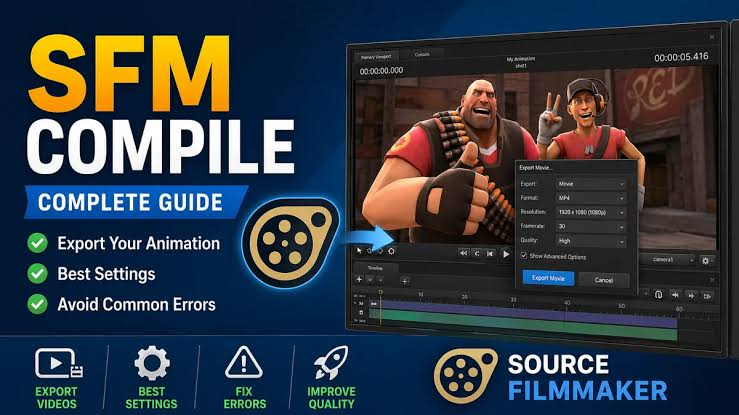
sfm compile sits at the intersection of creativity and technical production in Source Filmmaker. For many users, animation begins with characters, cameras, lighting, and storytelling. However, behind that visible work is a less glamorous but essential process: preparing assets so the software can actually interpret and use them correctly. Understanding what compile means can therefore make the workflow feel less mysterious. Rather than being merely a technical command, compilation represents the bridge between raw creative resources and a functioning digital scene, especially when custom models, materials, animations, or other assets are involved.
Why Compilation Matters in Source Filmmaker
Source Filmmaker relies on a structured ecosystem of models, textures, materials, animations, and other resources. Consequently, simply placing a file into a folder does not always make it immediately usable. Compilation converts certain source assets into formats that the Source engine can recognize efficiently. This process becomes particularly relevant when creators work beyond the software’s default library. In practice, understanding the relationship between source files and compiled assets can save time, reduce confusion, and help creators diagnose problems when something appears incorrectly inside a project.
From Raw Assets to Engine-Ready Resources
At its simplest, compilation can be understood as preparation. A creator may begin with a model or other resource designed for editing rather than direct engine use. Specialized tools can process that source material and produce files intended for the Source engine. The exact workflow varies depending on the asset type, but the underlying principle remains consistent: different stages of production use different representations of the same creative material. Therefore, successful compilation is not about changing the artistic idea itself; it is about translating that idea into a technical format that the engine can understand.
The Role of Models, Materials, and Textures
Models are only one part of the equation. A character may have a carefully constructed mesh, yet still appear incomplete if its textures or materials are not correctly prepared. Likewise, an object can load successfully while displaying missing textures or unexpected visual properties. Because these resources are interconnected, compilation should be viewed as part of a broader asset pipeline rather than an isolated button or command. For creators, this perspective is useful because it encourages systematic troubleshooting instead of assuming that every problem originates from the model itself.
A Typical Compilation Workflow
Although individual workflows differ, the general process follows a recognizable pattern. First, a creator prepares the original asset and checks its structure. Next, the appropriate Source-compatible tools process the relevant files. Afterward, the resulting compiled resources are placed where the software can locate them. Finally, the creator tests the asset inside the application. If something fails, the workflow becomes iterative: inspect the error, correct the source material or configuration, compile again, and test once more. This cycle is a normal part of technical creative work rather than evidence that the original project was unsuccessful.
Common Problems Creators Encounter
Compilation problems can be frustrating because the visible symptom may not clearly identify the underlying cause. Missing textures, incorrect paths, incompatible settings, naming issues, or improperly configured source files can all create difficulties. Moreover, a resource may compile without producing the result the creator expected. For that reason, careful organization matters. Keeping source files separate from compiled outputs, using consistent naming conventions, and maintaining a predictable directory structure can make troubleshooting substantially easier. Over time, these habits turn what initially feels like technical chaos into a manageable production routine.
Compilation as Part of the Creative Process
It is tempting to separate technical work from artistic work, but digital filmmaking rarely allows such a clean division. A filmmaker working with Source Filmmaker may spend hours refining a scene, only to discover that an asset needs additional preparation before it behaves correctly. That moment can feel like an interruption. Nevertheless, technical understanding ultimately expands creative freedom. Once creators understand how assets move through the pipeline, they can experiment more confidently with custom environments, characters, props, and visual ideas without treating every technical obstacle as an unknown problem.
How Experience Changes the Learning Curve
For newcomers, compilation terminology can initially sound more complicated than it really is. Words associated with models, materials, source files, engine formats, and compiler tools can create the impression that advanced programming knowledge is required. In reality, the essential concepts are more approachable. A creator primarily needs to understand what the original asset contains, what the engine expects, and which stage of the pipeline is responsible for converting one into the other. As those relationships become familiar, the workflow becomes less intimidating and more predictable.
The Importance of Organization
Good organization is one of the quiet advantages of understanding sfm compile workflows. When projects contain numerous custom assets, locating the correct version of a file can become difficult. Clear folder structures and descriptive names reduce that friction. Additionally, keeping editable source materials available is valuable because compiled files are usually the result of a process rather than the ideal place for future artistic changes. In other words, organization preserves flexibility. It allows creators to return to an earlier stage, make adjustments, and reproduce the necessary output without rebuilding an entire project from memory.
Compilation and the Wider Modding Culture
The importance of compilation also reflects a larger culture surrounding Source-engine communities. For years, creators have explored ways to customize games and filmmaking tools beyond their original purposes. Tutorials, community tools, model repositories, technical discussions, and experimentation have collectively created an informal knowledge network. Consequently, learning how assets are prepared is not simply an individual technical exercise. It connects creators to a broader tradition of user-driven modification, where people learn from one another and gradually transform existing software into platforms for new forms of expression.
What a Successful Result Looks Like
A successful compilation is ultimately measured by what happens afterward. The asset should appear correctly, behave as expected, and interact appropriately with the surrounding project. A model might need functioning textures, animations, physics behavior, or other supporting resources depending on its intended role. Therefore, a successful workflow involves testing rather than assuming. Opening the asset in the intended environment and checking its visual and functional behavior provides the final confirmation. This practical feedback loop is especially important because technical success on paper does not always guarantee a satisfactory result inside a creative scene.
Learning Without Losing the Creative Focus
Technical processes can sometimes overwhelm creators who are primarily interested in storytelling. Yet the best approach is not to become an engineer before making art. Instead, creators can learn the specific technical concepts that directly support their projects. Understanding sfm compile in that context becomes useful because it answers a practical question: how does an asset move from something created or edited externally into something usable within a Source Filmmaker production? Once that question is clear, many intimidating terms become easier to place within the larger creative workflow.
Conclusion: The Hidden Craft Behind Digital Filmmaking
sfm compile represents a small but meaningful part of the infrastructure behind digital filmmaking with Source Filmmaker. While audiences ultimately notice characters, camera movement, lighting, editing, and storytelling, those visible elements depend on technical systems working correctly behind the scenes. Compilation is one of the processes that makes that possible. More importantly, learning how it works encourages a productive relationship between creativity and technology. For aspiring creators, that understanding can turn frustrating technical barriers into manageable steps—and, in doing so, open the door to a much wider range of creative possibilities.
