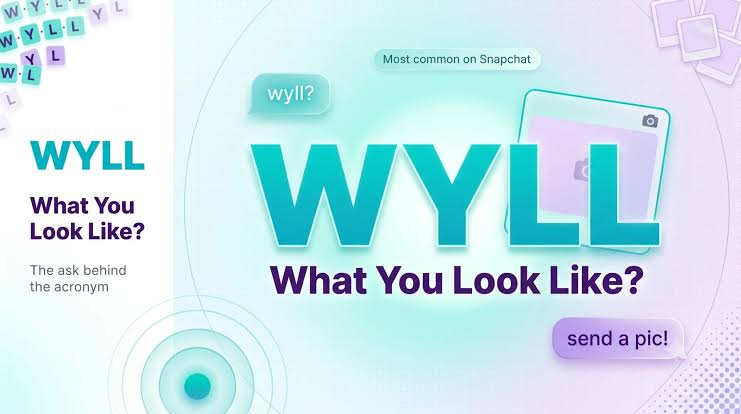
wyll meaning is a question that often appears when people encounter unfamiliar shorthand in texts, comments, gaming chats, or social media conversations. Online language changes quickly, and expressions that seem confusing at first can become recognizable once their context is understood. In many cases, wyll is used as an abbreviation for “what you look like?” It is typically a casual way of asking someone about their appearance, especially in informal digital conversations.
How wyll meaning Emerged in Internet Conversation
The internet has steadily encouraged people to shorten everyday phrases. Instead of writing a complete question, users often rely on abbreviations that save time and fit naturally into fast-moving conversations. Terms such as “wyd,” “wya,” and “idk” demonstrate how digital communication turns ordinary language into compact forms. Similarly, wyll meaning is connected to this broader culture of conversational shorthand.
However, the exact interpretation can depend on the platform and the surrounding conversation. Therefore, readers should consider the sentence, relationship between the speakers, and overall tone before deciding what an unfamiliar abbreviation means.
Why People Ask “What You Look Like?”
Asking what someone looks like is not necessarily complicated or unusual. In online spaces, people may communicate with someone for a long time without seeing them. Consequently, curiosity about appearance can become a natural part of a conversation.
The abbreviation can make the question sound particularly casual. Rather than using a formal sentence, a person may type a few letters and expect the other person to understand. This reflects one of the defining characteristics of internet communication: efficiency often matters more than conventional grammar.
At the same time, context remains important. A stranger asking about someone’s appearance may feel different from a friend making the same request. Thus, understanding digital language also requires understanding social boundaries.
The Role of Context in Understanding Wyll
One reason short internet expressions can be confusing is that abbreviations rarely carry their entire meaning by themselves. A reader may see wyll in a message and immediately wonder whether it represents a question, a joke, or something specific to a particular community.
Usually, surrounding words provide the strongest clue. If the conversation is about meeting someone, profiles, photographs, or personal appearance, the abbreviation is more likely to have its common conversational interpretation. If it appears within a specialized community, however, it could potentially have another meaning.
Therefore, the safest approach is not to assume that every abbreviation has one universal definition. Digital vocabulary is flexible, and users frequently create new meanings.
From Texting Shortcut to Recognizable Slang
The development of expressions such as this illustrates how language evolves outside traditional institutions. Historically, new vocabulary often spread through books, newspapers, music, workplaces, or regional communities. Today, social platforms can introduce a phrase to millions of people within a remarkably short period.
This environment rewards brevity. Phone keyboards, character limits, rapid conversations, and notification-driven communication all encourage shorter expressions. As a result, users develop shared shortcuts that allow them to communicate quickly while maintaining a sense of familiarity.
Wyll meaning therefore belongs to a much larger story about how technology influences everyday English. It is less about replacing traditional language and more about creating an additional layer of informal communication.
Why Short Digital Expressions Can Feel Confusing
For someone unfamiliar with online slang, an abbreviation may initially look almost meaningless. There are no spaces, punctuation marks, or conventional sentence structures to provide obvious clues. Moreover, different platforms can develop their own vocabulary.
Age and online experience can also influence familiarity. Someone who spends considerable time on social media may recognize an abbreviation immediately, while another person encountering it for the first time may need to search for an explanation.
This is not unusual. Language has always included expressions that make sense primarily within particular communities. Internet slang simply makes that process more visible because unfamiliar words can spread so quickly.
Digital Language and the Human Need for Connection
Behind many internet abbreviations is something surprisingly ordinary: people trying to connect. Whether they are discussing hobbies, friendships, entertainment, or personal experiences, users continue to rely on language to establish relationships.
An abbreviation such as wyll may appear insignificant, yet it can function as part of a larger conversation about identity and familiarity. Someone asking what another person looks like may be expressing curiosity, preparing for an offline meeting, or simply trying to make an online interaction more personal.
In that sense, digital shorthand is not only about speed. It can also reveal how people adapt language to fit new forms of social interaction.
Wyll and the Changing Shape of Online English
Modern English on the internet is highly adaptive. New abbreviations emerge, disappear, and sometimes become ordinary parts of everyday communication. Some remain limited to particular platforms, while others cross communities and become widely understood.
The popularity of shorthand also demonstrates that written communication does not always need to resemble formal writing. A message between friends has different expectations from an academic essay, newspaper article, or professional email.
Consequently, understanding online language requires recognizing the difference between formal and informal registers. Wyll may be perfectly natural in a casual conversation while being inappropriate in a formal document.
A Simple Guide to Interpreting Wyll
When encountering the expression, readers can use a few contextual clues:
| Context | Likely interpretation |
|---|---|
| Casual social-media conversation | “What you look like?” |
| Conversation about meeting someone | A request to know someone’s appearance |
| Profile or photo discussion | A casual appearance-related question |
| Specialized community | Check the surrounding conversation before assuming the meaning |
This approach is useful because internet abbreviations are not always fixed. Context helps determine whether a particular expression carries its most common meaning or something more specialized.
The Social Side of Appearance Questions
Questions about appearance can carry different social meanings. In a friendly conversation, they may simply express curiosity. In other situations, however, someone may prefer not to share personal photographs or information.
That is why digital communication benefits from the same basic courtesy expected in face-to-face interactions. People can choose what they are comfortable sharing, and a request does not automatically create an obligation to respond.
Understanding the phrase is therefore only one part of understanding the conversation. The social setting matters just as much as the vocabulary.
Why Internet Slang Continues to Evolve
Digital slang changes because online communities are constantly changing. New platforms introduce new communication styles, while memes, creators, gaming communities, and social trends influence vocabulary. A phrase that seems unfamiliar today may become widely recognized tomorrow.
Furthermore, users enjoy experimenting with language. Shortened words can feel playful, conversational, or community-specific. They can also communicate a sense of belonging because people who understand the expression immediately share a small piece of cultural knowledge.
This constant evolution makes internet language fascinating. It shows that English remains flexible even in an era dominated by keyboards, screens, and algorithms.
Frequently Asked Questions
What does wyll meaning usually refer to?
In casual online conversation, it commonly refers to “what you look like?” and is used as a shortened way of asking about someone’s appearance.
Is wyll formal English?
No. It is generally considered informal internet shorthand rather than standard formal English.
Where might someone encounter wyll?
It may appear in texting, social-media comments, direct messages, online communities, or other casual digital conversations.
Does wyll always have the same meaning?
Not necessarily. Internet abbreviations can vary between communities, so the surrounding conversation should always be considered.
Conclusion
The story behind wyll meaning is ultimately a small example of a much larger transformation in communication. People have always shortened language when circumstances encourage speed, familiarity, or convenience. Digital platforms have simply accelerated that process, allowing new expressions to travel rapidly between communities.
Understanding such shorthand is therefore about more than memorizing an abbreviation. It means recognizing how language responds to technology, social habits, and changing forms of connection. Wyll may consist of only a few letters, but its use reflects a broader digital culture in which people continually reshape English to make conversation faster, more informal, and more connected.