Lexie Wiggly is a name that has gradually become familiar to people interested in professional bull riding, celebrity biographies, and the lives of people who briefly enter the public eye. Her recognition is closely connected to J.B. Mauney, one of the most celebrated bull riders of his generation. However, her story is more nuanced than a simple account of being a famous athlete’s former wife. Public reporting from the years when she was connected to Mauney offers glimpses of a woman already familiar with rodeo culture, while later information about her life remains comparatively private.
| Detail | Publicly reported information |
|---|---|
| Known for | Connection to professional bull rider J.B. Mauney |
| Rodeo connection | Associated with barrel racing |
| Education | Reported attendance at Paoli High School and classes at East Central University |
| Marriage | Married J.B. Mauney in 2012 |
| Public visibility | Most visible during Mauney’s major rodeo years |
| Later life | Largely private and difficult to verify through authoritative sources |
Lexie Wiggly and the World That First Brought Her Attention
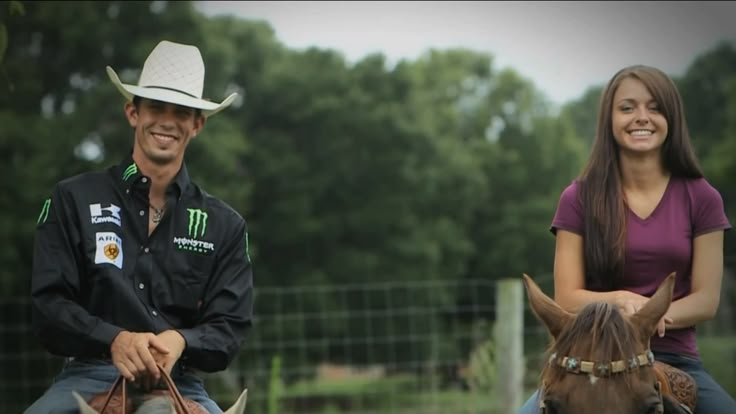
For many readers, Lexie Wiggly first became recognizable through professional rodeo rather than entertainment. Her relationship with J.B. Mauney placed her near one of the most demanding and highly competitive sports in the United States. Yet contemporary reporting suggests that rodeo was not entirely unfamiliar territory to her. Public accounts have associated her with barrel racing, an event requiring its own combination of horsemanship, timing, confidence, and competitive discipline. Consequently, her connection to the rodeo world cannot be understood solely through her marriage to a champion bull rider.
A Background Rooted in Oklahoma and Rodeo Culture
One of the more substantial public accounts comes from reporting produced during Mauney’s career. That coverage described Lexie as having grown up in Paoli, Oklahoma, and identified her mother as Lora Wigley and her maternal grandparents as Wanda and Joe Lee Wigley. She reportedly graduated from Paoli High School in 2006 and later took classes at East Central University in Ada. These details are particularly useful because they originate from coverage closer to the period of her public visibility, rather than from later biography sites that sometimes repeat unsupported information.
Lexie Wiggly’s Connection With J.B. Mauney
Her relationship with J.B. Mauney became the defining reason her name entered wider public discussion. Mauney was already building an extraordinary reputation in professional bull riding, and the couple married in May 2012. Their relationship unfolded during an important period in his career, including the years surrounding his 2013 PBR World Championship. As a result, photographs and reports from rodeo events occasionally placed Lexie alongside him. Nevertheless, there is little evidence that she attempted to turn that association into a conventional celebrity career.
The Public Interest Around a Private Marriage
Celebrity culture often treats relationships as extensions of a famous person’s biography. In this case, however, the available record tells a quieter story. Lexie appeared in public because of her relationship with Mauney, but she did not become a regular television personality or entertainment figure. Her presence was usually connected to sporting events, family moments, or coverage surrounding the rider’s career. Therefore, much of the continuing curiosity about her comes from the contrast between temporary visibility and long-term privacy. That contrast has made her biography unusually difficult to reconstruct with confidence.
Why the Name Appears With Different Spellings
An interesting complication surrounding the subject is the spelling of her surname. Readers may encounter Lexie Wiggly, Lexie Wigley, or occasionally other variations in online material. Contemporary professional bull-riding coverage itself has used more than one version, while family-related reporting supports the Wigley spelling. Getty Images has also used the Wiggly form in event captions. Consequently, search results can appear fragmented even when they concern the same person. Rather than treating one spelling as unquestionably correct, responsible coverage should acknowledge the inconsistency and distinguish documented information from later online repetition.
Lexie Wiggly After the Rodeo Spotlight
The most striking part of the story may be what happened after the period of greatest public attention. Following the end of her marriage to Mauney, she became far less visible in major sports coverage. Numerous newer websites claim information about her profession, relationships, residence, and current lifestyle; however, those claims are not consistently supported by authoritative sources. Some describe her as an esthetician, while others provide precise personal details that cannot be independently established. For that reason, her post-rodeo life is best described cautiously rather than filled with speculation.
What Her Story Says About Modern Celebrity Culture
There is a wider cultural lesson in the fascination surrounding Lexie Wiggly. The internet has created an expectation that anyone connected to a famous person should have a searchable biography containing every major detail. Yet not everyone chooses that kind of visibility. Her story demonstrates the tension between public curiosity and personal boundaries, particularly when someone becomes recognizable through association rather than through a career in entertainment.
Moreover, the gaps in her biography are meaningful. They remind readers that an incomplete public record does not necessarily indicate an incomplete life. Sometimes it simply means that a person has chosen not to make every chapter available to the public.
The Difference Between Documented History and Online Assumptions
Modern biography websites can make a private person’s story appear surprisingly complete. Birth dates, professions, current relationships, financial estimates, and social-media accounts may be repeated from one page to another until they seem authoritative. However, repetition is not the same as verification.
In the case of Lexie Wiggly, contemporary reporting provides a stronger foundation for understanding her Oklahoma background, rodeo connection, marriage, and public appearances. By contrast, claims about her current occupation, finances, relationship status, or residence require considerably more caution. That distinction is important because responsible celebrity writing should value accuracy over the appearance of completeness.
A Life Remembered Beyond Someone Else’s Fame
The enduring interest in Lexie Wiggly ultimately says as much about modern audiences as it does about the individual herself. People naturally want to know what happens to those who stand beside famous athletes during important moments. Yet her story resists the usual celebrity formula. There is no extensive public archive documenting every stage of her adult life, and that absence should not be treated as an invitation to speculate.
Instead, the available record presents a woman connected to Oklahoma, horses, rodeo culture, and one of professional bull riding’s best-known competitors. Her public chapter was significant, but it was never the whole story.
Conclusion: The Value of Leaving Some Stories Private
Lexie Wiggly remains an intriguing figure precisely because her public story is limited. She entered wider awareness through J.B. Mauney and the intense culture of professional rodeo, yet she never became a conventional celebrity in her own right. The most reliable accounts offer a picture of someone with her own connection to horses and rodeo before becoming associated with one of the sport’s biggest names.
Ultimately, her biography is a reminder that public interest does not erase the value of privacy. In an age when almost every detail can be copied, reposted, and transformed into biography, sometimes the most responsible portrait is the one that clearly separates what is documented from what remains unknown. That approach makes the story not only more accurate, but also more human.