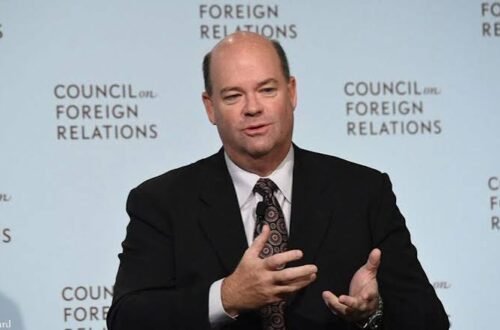
julie dill and hans vestberg bring together two distinctly different corporate stories, yet both careers illustrate how leadership has expanded beyond a single discipline. Dill built a long career across energy, finance, strategy, communications, and corporate governance, while Vestberg developed his reputation in global telecommunications and technology. Their professional paths are not presented in reliable sources as a shared partnership or joint venture; rather, the value of examining them together lies in the contrasting leadership models their careers represent.
Julie Dill’s Career Across Energy, Strategy, and Governance
Julie A. Dill developed her career within the energy industry, holding senior positions at companies including Shell, Duke Energy, and Spectra Energy. Her responsibilities extended across finance, operations, strategy, communications, and executive management. She later became Chief Communications Officer at Spectra Energy, a role she held until the company completed its merger with Enbridge in 2017.
Her earlier career was equally broad. Dill served as President of Union Gas in Ontario and later became President and CEO of Spectra Energy Partners. These positions placed her close to both operational decision-making and larger questions about corporate strategy. Consequently, her later transition into board service reflected a career built across several sides of corporate leadership rather than a single specialty.
Hans Vestberg and the Transformation of Telecommunications
Hans Vestberg followed a different route, moving through the telecommunications industry before becoming one of the most recognizable executives associated with Verizon. He previously served as President and CEO of Ericsson and joined Verizon in 2017 as an executive responsible for networks and technology. He became Verizon CEO in August 2018 and chairman in March 2019.
His career has been closely connected with technological transformation. At Ericsson, Vestberg helped move the company beyond its traditional hardware orientation toward software and services. At Verizon, his leadership became associated with the company’s 5G strategy, network investment, and broader transformation of its communications infrastructure.
Two Leaders, Two Very Different Professional Landscapes
| Executive | Professional background | Major leadership areas | Broader significance |
|---|---|---|---|
| Julie Dill | Energy, finance, communications and strategy | Corporate leadership and board governance | Demonstrates the value of cross-functional executive experience |
| Hans Vestberg | Telecommunications and technology | Networks, digital infrastructure and corporate transformation | Represents technology-focused leadership in a rapidly changing industry |
The comparison is useful precisely because their careers are not identical. Dill’s professional history demonstrates how leadership can develop through movement among finance, operations, communications, and governance. Vestberg’s career, meanwhile, demonstrates the importance of technological knowledge combined with global management experience. Together, their trajectories show that modern executive leadership can emerge from very different foundations.
The Importance of Cross-Industry Experience
Dill’s career offers an interesting perspective on the way senior executives adapt their experience over time. After decades in energy, she moved increasingly toward board responsibilities. The National Association of Corporate Directors notes her service on multiple boards and her involvement in professional and educational organizations.

Vestberg’s international experience provides a different example of professional adaptability. His career has included work in Sweden, China, Chile, Brazil, Mexico, and the United States, giving his professional story a distinctly international dimension. His background also includes leadership beyond corporate technology, including involvement with the Swedish Olympic Committee and digital-inclusion initiatives.
Leadership Beyond the Executive Office
One of the more interesting themes surrounding Julie Dill and Hans Vestberg is the changing meaning of corporate leadership itself. A modern executive is rarely defined only by a job title. Instead, leadership increasingly involves communication, technological understanding, stakeholder relationships, governance, and the ability to navigate major changes.
Dill’s transition from operating roles into board leadership illustrates this evolution particularly well. Her experience across finance, communications, strategy, and operations created a foundation for governance responsibilities later in her career.
Vestberg’s career shows another side of the same development. Telecommunications companies operate at the intersection of technology, infrastructure, consumers, governments, and global markets. Therefore, leading such an organization requires an understanding of both technical systems and broader business strategy.
Why Their Stories Remain Relevant
Corporate careers are often presented as straightforward ladders, but the stories of these two executives suggest something more complicated. Professional development can involve changing industries, acquiring unfamiliar responsibilities, learning new forms of leadership, and eventually applying accumulated experience in different settings.
For Dill, that evolution moved from energy operations and executive management toward boardroom governance. For Vestberg, it moved from engineering and telecommunications into global corporate leadership. Neither trajectory represents a single formula for success. Instead, each reflects adaptation to changing professional circumstances.
A Broader View of Corporate Leadership
Looking at these careers together also highlights an important cultural shift in business. Corporate leaders today are expected to understand more than their immediate operational responsibilities. They must communicate clearly, work across disciplines, respond to technological or economic change, and understand how organizational decisions affect employees, customers, investors, and communities.
Dill’s background in communications is particularly relevant in this context. Her experience shows how communication can become a strategic leadership function rather than simply a public-relations responsibility. Vestberg’s technology background demonstrates the parallel importance of understanding infrastructure and innovation when technology becomes central to a company’s identity.
Frequently Asked Questions
Who is Julie Dill?
Julie A. Dill is an experienced corporate executive and director whose career has included senior positions in the energy sector, including leadership roles at Union Gas and Spectra Energy. She has subsequently held multiple corporate board positions.
Who is Hans Vestberg?
Hans Vestberg is a Swedish business executive and telecommunications leader who served as Verizon’s CEO from 2018 to 2025 and chairman from 2019 to 2025. As of 2026, BlackRock identifies him as a Special Advisor to Verizon.
Are Julie Dill and Hans Vestberg professionally connected?
Available reliable biographical sources document separate careers for Dill and Vestberg. They do not establish a major shared project, business partnership, or personal relationship between the two.
What industries are associated with their careers?
Dill is primarily associated with energy, corporate strategy, communications, finance, and governance. Vestberg is primarily associated with telecommunications, technology, digital infrastructure, and global corporate leadership.
Conclusion: Different Paths Toward Modern Leadership
The story suggested by julie dill and hans vestberg is ultimately less about a direct connection between two individuals and more about two contrasting approaches to professional leadership. Dill’s career demonstrates the value of broad executive experience developed across energy, finance, strategy, communications, and governance. Vestberg’s career illustrates how technological expertise can evolve into global corporate leadership.
Their paths therefore provide two useful perspectives on the modern executive career: one rooted in cross-functional corporate experience and governance, the other shaped strongly by technology and international telecommunications. Neither story needs to be forced into a single narrative. Instead, their differences reveal how varied the routes into influential leadership can become.