








Introduction
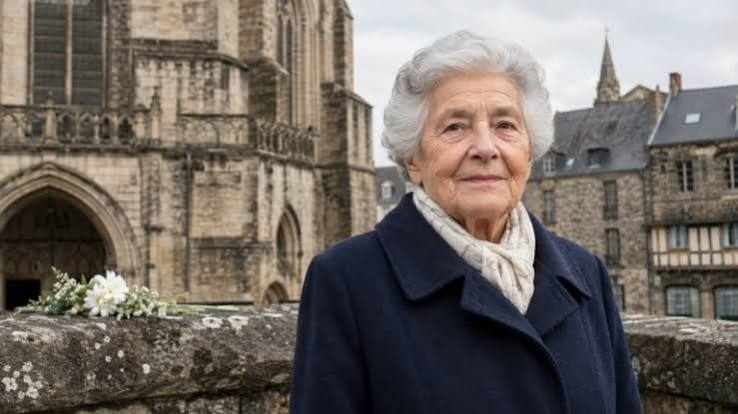
Jeannine Belleguic is a name that, at first glance, might seem to belong to a public figure whose life was documented through interviews, professional achievements, or media appearances. Yet the available evidence tells a considerably quieter story. Jeannine Belleguic was a French woman associated with Quimperlé and the surrounding Breton region, and her name entered wider online visibility largely through memorial notices and public records following her death in April 2025.
That distinction matters. In an era when search engines can turn almost any name into a searchable subject, digital visibility does not necessarily equal celebrity. Instead, a person’s online footprint can emerge from family history, local records, genealogy, or an obituary. In this case, those records offer a glimpse into an ordinary life rooted in Brittany while also demonstrating why responsible biography requires a careful separation between documented fact and internet speculation.
A Breton Identity Rooted in Quimperlé
The strongest records place Jeannine Belleguic within the cultural landscape of Brittany, particularly Quimperlé in Finistère. Public records identify her birth name as Jeannine Joséphine Annick Bleuzen and give her birth date as May 28, 1931. She later became known by the surname Belleguic, explaining why both names appear in searches concerning the same person.
Quimperlé itself provides meaningful context. Situated in western France, the town belongs to a region where local identity, family history, language, landscape, and community traditions have long been important parts of everyday life. Consequently, a biography of a private resident cannot be separated entirely from the place associated with her. The available record does not provide a detailed account of her childhood, schooling, or ambitions, but it does establish a clear connection to this Breton community.
What the Public Record Actually Establishes
When researching a relatively private person, restraint can be more valuable than an impressive-sounding biography. In the case of Jeannine Belleguic, the available records provide several firm points while leaving other aspects of her life undocumented.
| Detail | Publicly documented information |
|---|---|
| Name | Jeannine Belleguic, née Bleuzen |
| Birth name | Jeannine Joséphine Annick Bleuzen |
| Date of birth | May 28, 1931 |
| Birthplace | Quimperlé, Finistère, France |
| Date of death | April 18, 2025 |
| Age at death | 93 |
| Associated places | Quimperlé, Lorient and Guidel |
| Funeral | Église Notre-Dame de Quimperlé, April 25, 2025 |
These details come primarily from civil, obituary, memorial, and related records. They establish the basic chronology, but they do not constitute a conventional celebrity biography.
The Meaning Behind “Née Bleuzen”
One small linguistic detail helps explain much of the confusion surrounding searches for Jeannine Belleguic. French obituary notices commonly use the word née to identify a woman’s birth surname. Thus, the expression “Jeannine BELLÉGUIC née BLEUZEN” indicates that Bleuzen was her family name at birth.
This is more than a grammatical detail. Search engines can treat names as separate identities, particularly when spelling, accents, married names, and maiden names vary between records. As a result, someone researching the family may encounter Jeannine Bleuzen in one document and Jeannine Belleguic in another. Understanding the naming convention makes those records easier to connect without unnecessarily assuming that every similar name refers to the same person.
Family Records Offer a More Personal Picture
Although the public record does not provide a complete narrative of her private life, family and genealogy material offers some additional context. Sources discussing the family identify Jean Charles Belleguic as her husband and connect the family with Quimperlé. Some genealogy records also identify children, including Gilles, Catherine, and Pierre Yves. However, genealogy databases can contain user-submitted material, so such information should be treated as useful supporting evidence rather than automatically equivalent to an official civil record.
That distinction is particularly important when writing about someone who was not a public figure. A family tree may preserve valuable memories and relationships, but it does not necessarily establish every detail beyond doubt. Therefore, the most responsible approach is to acknowledge family information while clearly distinguishing it from facts independently confirmed through official or established notices.
A Life That Was Not Built Around Public Attention
One of the most striking aspects of the story is what the available sources do not reveal. There is no well-established record showing that Jeannine Belleguic was an actress, singer, politician, influencer, or nationally prominent business figure. Instead, her public footprint is primarily associated with family notices, civil records, memorial information, and local connections.
That absence should not be interpreted as an absence of achievement or meaning. Most lives are not documented through newspapers, television appearances, awards, or professional profiles. For many people, significance exists primarily within family relationships and local communities. Indeed, the digital age has made it increasingly possible for those previously private lives to become searchable long after they were lived.
The Unanswered Question of Her Profession
Another area where caution is necessary concerns Jeannine Belleguic’s professional life. The principal obituary and civil records reviewed do not establish a specific occupation or employer. Consequently, claims circulating online about an elaborate professional career should not automatically be treated as established biography.
This is an important lesson in digital research. A detailed web page can look authoritative simply because it contains numerous specific statements. Nevertheless, specificity is not the same thing as verification. A responsible biography should distinguish between information supported by primary records and claims that remain uncorroborated.
In practical terms, the safest conclusion is that her profession is not sufficiently established by the strongest publicly available sources reviewed for this article.
April 2025 and the End of a Long Life
Jeannine Belleguic died on April 18, 2025, at the age of 93. Records associate her death with Lorient, while the funeral notices connect the family farewell with Quimperlé. A funeral service was held at Église Notre-Dame de Quimperlé on April 25, 2025.
There is something inherently human about the way such information enters the public record. A death notice is not designed to create celebrity. It exists to inform relatives, friends, neighbors, and the wider community that a life has ended. Yet once indexed by search engines, that modest announcement can become the starting point for people around the world attempting to understand who the person was.
In this sense, Jeannine Belleguic’s digital story began not with fame but with remembrance.
Why Identity Checks Matter
There is also a significant research issue involving another woman with a similar name. French death-record databases contain a separate Jeannine Gisèle Marcelle Belleguic, who died in 1987 at the age of 46. That individual should not be confused with the Jeannine Belleguic born in 1931 and deceased in 2025.
Such overlaps are common in genealogy and online biography research. Names repeat across generations, regions, and unrelated families. Therefore, dates, places, relatives, and full names must be compared before records are combined.
This may sound like a technical detail, but it has a human consequence: attaching another person’s experiences to an individual’s biography can fundamentally distort that person’s story.
Brittany as More Than a Backdrop
The connection with Brittany adds a cultural dimension to the available record. Brittany has a distinctive regional identity within France, shaped by coastal geography, local traditions, historic communities, and enduring family networks. Quimperlé and nearby Lorient and Guidel belong to a landscape where personal and place-based identities often intersect.
For a private individual, this regional context may be more meaningful than an imagined list of professional accomplishments. A person’s story is not necessarily defined by public recognition. Sometimes it is defined by the town where they were born, the family name they carried, the people who remembered them, and the community in which their life unfolded.
That perspective makes the story less about celebrity and more about belonging.
The Digital Afterlife of an Ordinary Name
The online attention surrounding Jeannine Belleguic illustrates a broader cultural phenomenon. Search engines increasingly function as informal archives, bringing together official records, genealogy databases, memorial pages, copied biographies, and speculative articles.
However, these sources do not all have equal authority. A civil record may establish a date or identity. An obituary can provide family and funeral information. A genealogy website can suggest relationships worth investigating. A secondary biography, meanwhile, may add details that require independent confirmation.
Therefore, the modern biographical researcher faces a challenge that earlier generations rarely encountered: not simply finding information, but determining which information deserves confidence.
A More Human Definition of Legacy
The word legacy is often associated with famous careers, awards, inventions, or public achievements. Yet that definition is incomplete. For someone like Jeannine Belleguic, legacy may have existed in much smaller and more intimate forms: family relationships, memories shared between generations, and the continuity of a name within a particular community.
The public record cannot reproduce those experiences in full. Nor should a writer invent them. What it can do is preserve the documented outline of a life and acknowledge the limits of what outsiders can know.
That approach may seem less dramatic than a conventional celebrity biography, but it is ultimately more respectful.
Conclusion
Jeannine Belleguic’s story is a reminder that not every searchable name belongs to a celebrity. The available evidence identifies a French woman born Jeannine Joséphine Annick Bleuzen in Quimperlé in 1931, later known as Jeannine Belleguic, who died in 2025 at the age of 93. Her funeral was held in Quimperlé, reinforcing the connection between her final public record and the Breton community associated with her life.
More importantly, her story demonstrates the value of accuracy when documenting private lives. Online visibility can create the illusion that every detail is known, yet the strongest evidence may be surprisingly modest. In this case, what survives most clearly is a name, a family identity, a region, a date, and a record of remembrance.
Ultimately, that is enough to establish something meaningful: Jeannine Belleguic was not necessarily a public figure, but she was a person whose life mattered to the people around her. The digital record gives only a narrow window into that life. Treating that window carefully is perhaps the most respectful way to preserve what can genuinely be known.