John Wayne and Maureen O’Hara: A Legendary Hollywood Duo
John Wayne and Maureen O’Hara became one of classic Hollywood’s most memorable screen partnerships, combining rugged Western heroism, spirited Irish charm, and an unmistakable sense of on-screen chemistry. Their collaborations attracted audiences who appreciated more than conventional romance; instead, they offered lively exchanges, strong personalities, humor, and emotional warmth. Although both actors enjoyed successful careers independently, their films together developed a special place in Hollywood history. Moreover, their partnership demonstrated how two performers with contrasting screen identities could create a cinematic relationship that remained appealing across generations.
Who Were John Wayne and Maureen O’Hara?
John Wayne was an American actor best known for portraying determined cowboys, military figures, and independent heroes. Maureen O’Hara, an Irish-born actress, became famous for her expressive performances, fiery personality, and ability to portray confident women. Together, they appeared in several popular films that blended adventure, comedy, family relationships, and romance.
| Category | John Wayne | Maureen O’Hara |
|---|---|---|
| Full name | Marion Robert Morrison | Maureen FitzSimons |
| Born | May 26, 1907 | August 17, 1920 |
| Nationality | American | Irish-American |
| Known for | Westerns and adventure films | Adventure, drama, and romantic comedies |
| Notable film together | The Quiet Man | The Quiet Man |
| Screen identity | Strong, independent, determined hero | Spirited, outspoken, confident heroine |
Their contrasting personalities contributed significantly to their shared appeal. Wayne often represented a quiet, dependable masculinity, while O’Hara brought energy and emotional directness to her characters. Consequently, their scenes frequently felt like encounters between equals rather than predictable exchanges between a leading man and a supporting actress.
How Their Hollywood Partnership Began
The partnership between John Wayne and Maureen O’Hara developed during a period when Hollywood studios relied heavily on recognizable stars to attract audiences. Wayne had already established himself as a leading figure in Western cinema, whereas O’Hara had earned recognition for her beauty, dramatic ability, and commanding screen presence.
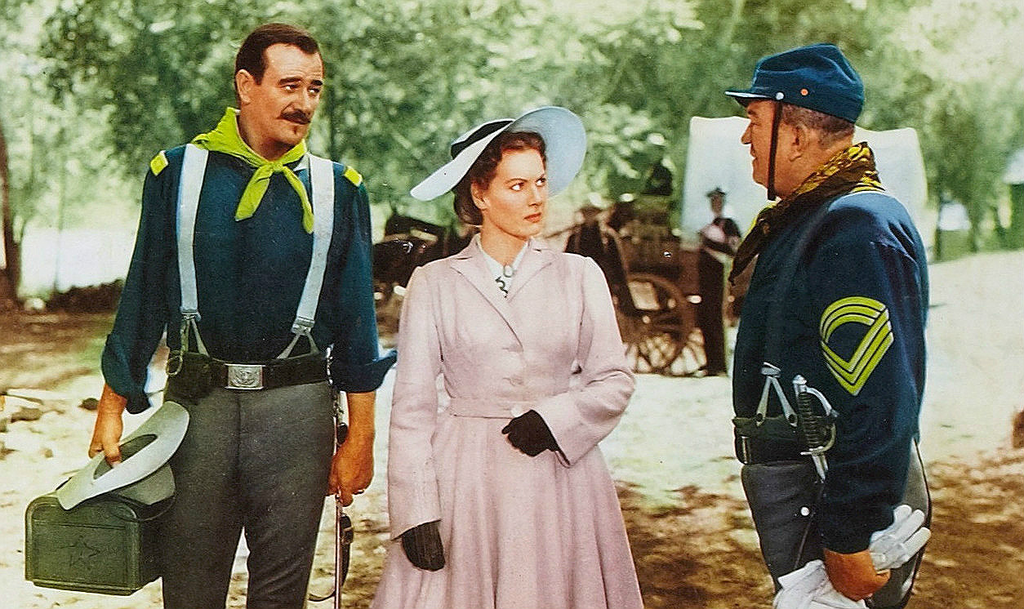
Their first film together was Rio Grande (1950), directed by John Ford. Set against a military frontier backdrop, the film introduced audiences to their ability to share the screen naturally. Although the story focused on military duty and family tensions, their performances helped establish a dynamic that would become increasingly recognizable.
Furthermore, their collaboration benefited from working with filmmakers who understood how to balance action with character development. Rather than relying exclusively on spectacle, their films often explored loyalty, pride, family obligations, and the complicated emotions that shape relationships.
The Quiet Man: The Film That Defined Their Connection
Among all their collaborations, The Quiet Man (1952) remains the defining example of the John Wayne and Maureen O’Hara partnership. Directed by John Ford and filmed largely in Ireland, the romantic comedy-drama follows Sean Thornton, an American former boxer who returns to his ancestral homeland, and Mary Kate Danaher, a strong-willed Irish woman.
The Quiet Man (1952) — a landmark film in their shared careers.
The Irish countryside provides more than a picturesque background. Its villages, landscapes, customs, and social expectations help shape the characters’ decisions. Wayne’s restrained performance contrasts with O’Hara’s lively portrayal of Mary Kate, creating tension and humor throughout the story.
Moreover, the film explores the relationship between personal independence and traditional expectations. Mary Kate insists that her wishes and possessions deserve respect, while Sean must learn to understand the cultural and emotional significance of her position. Their disagreements give the story much of its dramatic energy.
The film received considerable recognition, winning two Academy Awards, including Best Director for John Ford. Its enduring popularity also reflects the appeal of its Irish setting and the distinctive interaction between its leading performers.
Why Their On-Screen Chemistry Felt Different
The chemistry between Wayne and O’Hara rested on contrast rather than similarity. Wayne frequently played characters who communicated through action, silence, and controlled emotion. O’Hara, by comparison, excelled at portraying women who spoke their minds and challenged the people around them.
As a result, their scenes often developed through playful arguments, teasing, and moments of genuine affection. Neither performer needed to disappear into the other’s personality for the relationship to work. Instead, their differences gave their characters room to express individuality.
Their partnership also reflected an important aspect of classic Hollywood storytelling: romance could emerge through conflict, humor, and mutual recognition. Although some elements of their films reflect the social attitudes of their time, their performances continue to attract viewers who appreciate strong personalities and lively dialogue.
Beyond The Quiet Man: Other Memorable Collaborations
Their work together extended beyond a single celebrated film. Each collaboration placed their familiar screen dynamic within a different narrative setting.
| Film | Year | Why It Matters |
|---|---|---|
| Rio Grande | 1950 | Established their partnership in a Western and military drama. |
| The Quiet Man | 1952 | Brought Irish culture, romance, and comedy together in their most celebrated collaboration. |
| The Wings of Eagles | 1957 | Explored military service, ambition, and family life. |
| McLintock! | 1963 | Used Western comedy to showcase their spirited exchanges. |
| Big Jake | 1971 | Reunited them in a Western centered on family, danger, and determination. |
These films reveal the flexibility of their partnership. They could move from romantic tension to family drama and broad comedy without losing the contrasting qualities that made their performances distinctive.
McLintock! and the Comic Side of Their Partnership
Released in 1963, McLintock! offered a different interpretation of the Wayne-O’Hara dynamic. Loosely inspired by Shakespeare’s The Taming of the Shrew, the Western comedy features Wayne as George Washington McLintock, a wealthy rancher, and O’Hara as Katherine, his estranged wife.
The film relies on misunderstandings, exaggerated disagreements, and the clash between two strong personalities. O’Hara brings sharpness and determination to Katherine, while Wayne embraces the comic possibilities of a character whose confidence does not always translate into domestic harmony.
Nevertheless, contemporary viewers may interpret certain aspects of the film differently from audiences in the 1960s. Its treatment of marriage and gender roles reflects conventions of its period, making it useful to consider both as entertainment and as a historical example of Hollywood comedy.
Their Friendship Beyond the Camera
Public recollections and accounts of their careers have helped establish Wayne and O’Hara as close friends as well as professional collaborators. Their repeated work together created familiarity, and both performers expressed appreciation for the distinctive connection they shared.
O’Hara later spoke warmly about Wayne and the relationship they maintained over the years. Their friendship became part of the story surrounding their films, adding another dimension to the audience’s understanding of their partnership.
However, it is important to distinguish documented friendship from speculation about a romantic relationship. Their screen performances could suggest intimacy and affection, but those qualities do not establish that the actors were romantically involved in real life. Their lasting connection is best understood through their professional achievements and the friendship they publicly described.
How Their Films Reflected Hollywood’s Changing Culture
The careers of John Wayne and Maureen O’Hara spanned decades of significant change in American cinema. During the middle of the twentieth century, Westerns often explored questions of justice, courage, independence, and the meaning of community. Their films drew on these themes while incorporating humor and domestic relationships.
O’Hara’s characters also offered a distinctive presence within a studio system that frequently limited female characters to conventional romantic roles. Her performances often featured women who challenged authority, expressed frustration, and demanded recognition.
At the same time, modern audiences may question the gender expectations embedded in some of these stories. This tension between historical context and contemporary interpretation is part of what makes classic Hollywood worth revisiting. The films preserve the entertainment conventions of their era while inviting discussion about how relationships and social values have changed.
Why Audiences Still Enjoy John Wayne and Maureen O’Hara
Their continued popularity comes partly from the accessibility of their stories. Family disagreements, pride, belonging, affection, and the desire to be understood remain recognizable human experiences, even when they appear within the conventions of an older Hollywood production.
Additionally, their films offer a particular kind of cinematic atmosphere. The landscapes of Ireland, the open spaces of the American West, carefully composed scenes, and memorable character interactions create a viewing experience distinct from much contemporary filmmaking.
For longtime admirers, these movies evoke the golden age of studio cinema. For younger viewers, they offer an opportunity to discover how earlier generations represented romance, family, and heroism. Their work therefore remains relevant not because every element has aged perfectly, but because the performances continue to encourage conversation.
Frequently Asked Questions
Were John Wayne and Maureen O’Hara married in real life?
No. They were not married to each other. Wayne had three marriages during his life, while O’Hara married three times, including her marriage to Charles F. Blair Jr.
What was their most famous movie together?
The Quiet Man (1952) is generally regarded as their signature collaboration. Its Irish setting, romantic storyline, and memorable performances helped make it a classic.
How many movies did they make together?
They appeared together in five feature films: Rio Grande, The Quiet Man, The Wings of Eagles, McLintock!, and Big Jake.
Were John Wayne and Maureen O’Hara romantically involved?
They were known for their friendship and professional chemistry. However, their on-screen romance should not be confused with a confirmed romantic relationship in real life.
Conclusion: A Hollywood Partnership That Transcended Its Era
John Wayne and Maureen O’Hara created a cinematic partnership that remains memorable because it combined contrasting personalities, emotional warmth, humor, and a shared ability to command attention. From the Irish landscapes of The Quiet Man to the lively disagreements of McLintock!, their collaborations demonstrated how character-driven performances could enrich familiar Hollywood genres.
Ultimately, their legacy extends beyond nostalgia. Their films provide a window into the storytelling traditions, cultural assumptions, and changing expectations of twentieth-century cinema. More importantly, they preserve the work of two performers whose individual strengths became especially compelling when they appeared together. Their partnership remains a distinctive chapter in Hollywood history, remembered for its energy, friendship, and enduring screen appeal.