Introduction: Shelley Covel Rowland and the Story Behind the Name
Shelley Covel Rowland is a name closely connected with one of country music’s most recognizable figures, Toby Keith. Yet, unlike her famous father, she has largely remained outside the entertainment spotlight. Keith adopted Shelley after marrying her mother, Tricia Lucus, in 1984, and she grew up as part of the family alongside her younger siblings, Krystal and Stelen. While Toby Keith built a remarkable career as a singer, songwriter, performer, and entrepreneur, Shelley followed a considerably quieter path. That contrast makes her story an interesting reflection on family, fame, privacy, and identity.
Who Is Shelley Covel Rowland?
Shelley Covel Rowland is best known publicly as Toby Keith’s adopted daughter and as a member of the Covel family. Her father’s career eventually placed the family in the center of American country music culture, but Shelley herself did not pursue the same highly visible musical career as her sister, Krystal Keith. Consequently, reliable public information about her is much more limited than information about her father or sister. That relative privacy is important when considering her life because celebrity families often attract assumptions that go beyond what has actually been documented. In Shelley’s case, the available record supports a story centered primarily on family rather than celebrity.
A Family Connection That Began Before the Fame
One of the most significant details in Shelley Covel Rowland’s story is that she was part of Toby Keith’s family before he became a major country music star. Toby Keith married Tricia Lucus in 1984 and adopted her daughter Shelley. Later, the couple welcomed Krystal and Stelen, creating the family structure that became familiar to fans over the following decades. Importantly, Shelley therefore experienced the family’s evolution from a relatively private Oklahoma household into one connected with a nationally recognized entertainer. That perspective gives her place in the family a distinctive human dimension: she knew the person behind the public image before the world knew the celebrity.
Shelley Covel Rowland in the Shadow of a Country Music Icon
Toby Keith’s rise was substantial. The Country Music Hall of Fame describes him as an artist with a commanding voice, a distinctive persona, and a songwriting style that helped shape country music in the twenty-first century. He moved from work in Oklahoma’s oil fields and performances with his band to a major recording career, eventually becoming one of country music’s most recognizable names. For Shelley, however, her father’s growing fame did not automatically translate into a public career of her own. Instead, she remained comparatively distant from the entertainment machinery surrounding the Keith name.
A Look at the Covel Family
| Family member | Connection to Shelley | Publicly known for |
|---|---|---|
| Toby Keith Covel | Adoptive father | Country singer, songwriter, performer and entrepreneur |
| Tricia Lucus | Mother | Toby Keith’s wife and family partner |
| Krystal Keith | Sister | Country singer-songwriter |
| Stelen Keith Covel | Brother | Member of the Covel family |
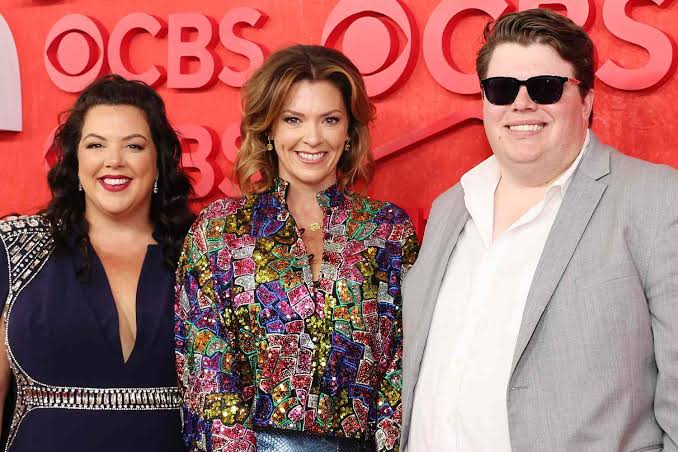
This family structure helps explain why Shelley is often mentioned in stories about Toby Keith. Her connection is not simply that of a celebrity relative discovered after the fact; she was part of the family from the period when Keith’s personal and professional lives were developing. Krystal later entered music herself, while Shelley remained far less visible. ABC News confirmed that all three children were present at the 2024 CMT Music Awards when the family gathered to honor Toby Keith following his death.
Choosing Privacy in a Celebrity Family
Perhaps the most compelling aspect of Shelley Covel Rowland’s public story is what is missing. There is no extensive public career record comparable to that of Toby Keith, and there is no reason to assume that a quieter life represents a lack of achievement or ambition. Instead, her limited public profile demonstrates another possible response to celebrity: maintaining boundaries. In an era when famous families can become subjects of constant social-media attention, choosing not to make every aspect of personal life public can itself be meaningful. Shelley’s relative absence from the spotlight allows the distinction between being related to fame and personally seeking fame to remain clear.
The Family Legacy After Toby Keith
Toby Keith died on February 5, 2024, at age 62, after being diagnosed with stomach cancer. His death transformed public interest in his family, with fans naturally looking beyond the music to the people who knew him most closely. Shelley was among the family members present when Keith was honored at the 2024 CMT Music Awards, an appearance that offered a rare public glimpse of the family united in remembrance. His posthumous recognition, including his 2024 induction into the Country Music Hall of Fame, has further strengthened the cultural conversation around his career and legacy.
More Than a Famous Father’s Daughter
It can be tempting to define Shelley Covel Rowland entirely through Toby Keith, but doing so reduces a private individual to a family connection. The more interesting perspective is to see her as someone whose life developed alongside an extraordinary public career without becoming dependent on that public identity. Her story also illustrates an important reality about celebrity families: not every member wants the same relationship with fame. While one sibling may become an entertainer and another may remain private, both choices can exist comfortably within the same family. In that sense, Shelley’s quieter presence is part of the larger Keith family story rather than merely an absence from it.
What Shelley Covel Rowland Represents in the Modern Celebrity Story
Modern celebrity culture often rewards visibility. Social platforms encourage people to share family milestones, professional achievements, opinions, and everyday experiences. Against that backdrop, Shelley Covel Rowland’s limited public presence feels increasingly distinctive. Her story reminds readers that proximity to fame does not require participation in it. Moreover, the public interest surrounding her demonstrates how audiences remain curious about the personal worlds behind famous performers. Yet responsible coverage should also recognize the difference between legitimate public information and speculation. The strongest portrait is therefore not one built from unverified details, but one that respects the boundaries surrounding a person who has largely chosen a private life.
A Legacy Defined by Family as Much as Music
Ultimately, Shelley Covel Rowland occupies a quieter but meaningful place in the story of Toby Keith. Her father’s legacy is preserved through recordings, performances, awards, business ventures, charitable work, and recognition from institutions such as the Country Music Hall of Fame. However, behind those public achievements was a family that experienced the ordinary realities of life alongside extraordinary fame. Shelley’s presence within that family offers a reminder that cultural legacies are never created by public achievements alone. They also live through relationships, memories, and the people who knew an artist away from the stage.
Conclusion: The Value of a Life Outside the Spotlight
Shelley Covel Rowland’s story is ultimately less about celebrity than about the freedom to define one’s own relationship with it. As Toby Keith’s adopted daughter, she became connected to an important chapter in modern country music history. Nevertheless, she did not become defined by a public career in entertainment. Her relatively private position provides a useful counterpoint to the visibility associated with her father and sister. In the years following Toby Keith’s death, interest in his family will likely continue, but Shelley’s story deserves to be understood with perspective: sometimes the most meaningful role in a famous family is simply being part of the family itself.